
Key Points
- Fall brings ideal temperatures for root recovery across Stamford, CT.
- Heavy clay soil packs down over time and blocks proper water flow.
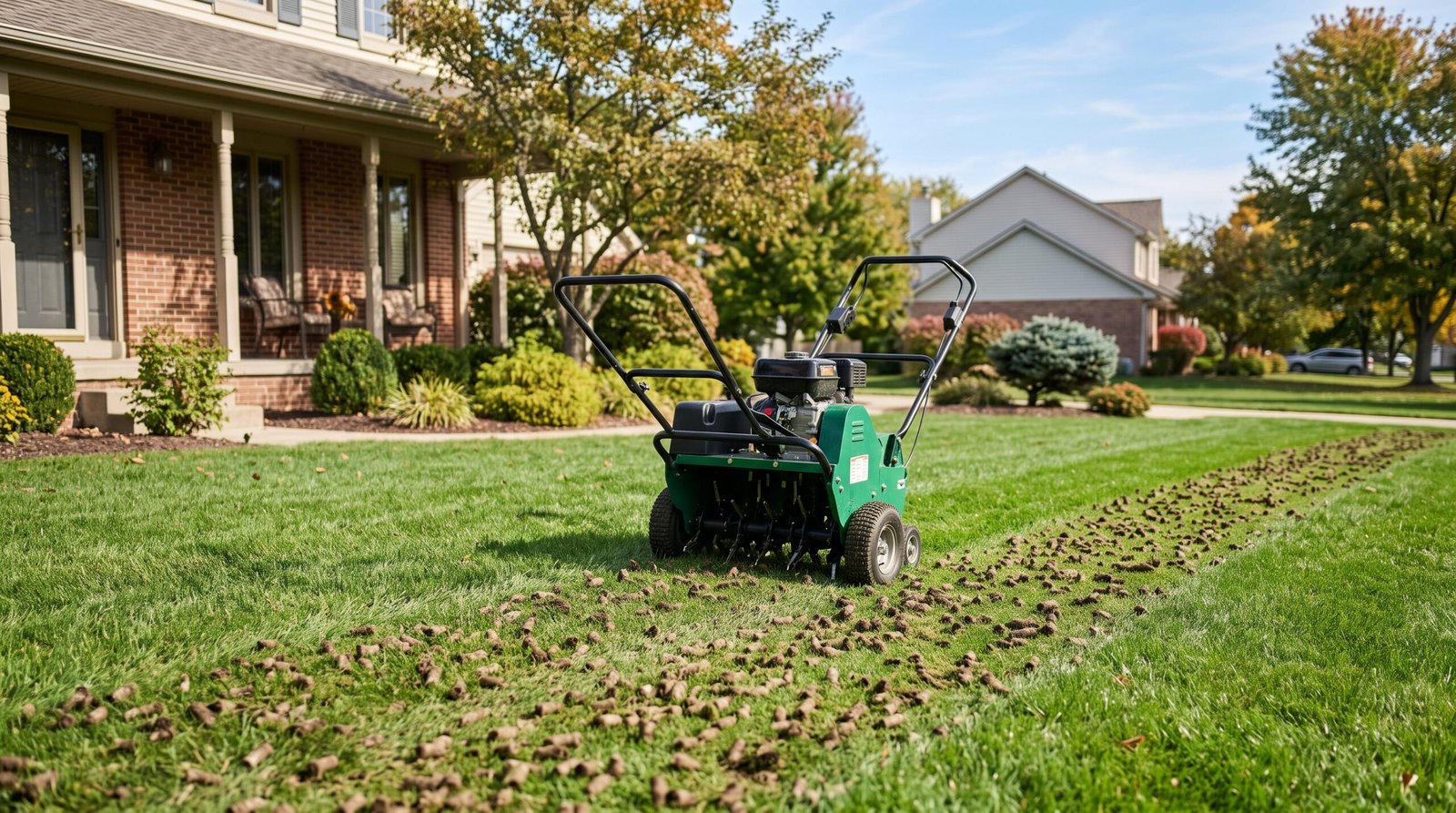
- Aeration removes dense soil plugs so air reaches plant roots easily.
- Stronger root systems protect your grass throughout harsh winter months.
- Our crew restores grass health using professional commercial equipment.
Grass roots require adequate room to spread effectively. Dirt packs down hard after heavy summer foot traffic, especially because local soil contains high clay content. Clay particles stick together tightly and form a solid barrier.
Consequently, rain runs off the surface instead of soaking deep into the ground. Grass starves when vital nutrients cannot reach root zones, which causes turf to turn brown and thin.
Ideal Season for Lawn Aeration
Fall offers the best time to aerate lawn growth across southern Connecticut. September and October provide cool air alongside warm ground, so grass grows fast under these specific climate conditions. Root systems repair quickly before winter frost arrives, while cool weather stops aggressive weeds from taking over open holes. Spring aeration works as well, but spring weeds spread fast into open dirt spots.
You give grass a huge advantage with fall service because summer heat causes extreme stress on local turf. Early autumn rain helps seeds sprout fast, while soil temperatures remain warm enough for rapid root growth.
You can check your yard using a simple test. Push a screwdriver deep into the ground. Hard soil stops the tool right away, whereas easy entry means your dirt remains loose and healthy. Most local yards fail this test after hot summers, so we help homeowners fix hard ground fast.
Signs Your Lawn Needs Core Aeration
Does your yard look tired and thin? Thin grass frequently reveals hidden dirt issues below the surface. You can spot clear signs your lawn needs aeration after rain showers when excess water sits on top of grass for days. Thin spots form in high-traffic paths, while spongy thatch accumulates between green blades and dirt.
Grass turns yellow even after fertilizer treatments because roots stay near the surface when they cannot pierce hard ground. Summer drought scorches shallow roots quickly, so our crew checks your soil condition right away.
Prominent Benefits of Core Aeration for Lawn
Fresh air reaches deep into root zones immediately after treatment. Water soaks deep down instead of running into driveway drains, and fertilizer touches roots directly for maximum impact.
Consequently, grass builds thick turf that blocks summer weeds naturally, so you save money on water bills during dry weeks.
The primary benefits of lawn aeration involve creating deeper root systems that handle winter frost with ease. Aeration loosens heavy thatch layers near the surface, enabling helpful microbes to break down dead plant debris faster within loose dirt. Thus, your yard opens up green and full next spring.
How Do Air and Water Reach Grass Roots?
Packed soil acts like pavement, leaving roots struggling underground without direct access to nutrients. Aeration opens up small channels through the topsoil layer, so rain soaks straight into root zones.
In addition, oxygen flows into these openings to sustain soil microbes. Microbes clear away dead plant buildup on top of dirt, but they require fresh air to function well. Greater airflow speeds up natural decomposition, which lets your turf absorb liquid fertilizer rapidly and produces rich green grass.
Microbes clean up dead plant matter on top of the soil, but healthy microbes need oxygen to survive and work. Airflow speeds up natural decomposition processes, allowing your turf to absorb liquid fertilizer much faster. Ultimately, healthy dirt creates vibrant green top growth.
Overseeding After Pulling Soil Plugs
Yes, fall seeding works great right after core removal because seeds drop directly into fresh core holes. These holes protect seeds from birds and washouts, while direct soil contact helps grass seed germinate fast. New grass fills bare spots before winter arrives.
We spread high-quality grass seed over fresh holes using a turf blend that matches local conditions. Young grass plants establish deep root systems before cold weather hits, so this combined service creates dense grass that resists summer heat.
How Often Does Your Yard Require Core Removal?
High-traffic yards need service once every year, whereas quiet yards with sandy soil need service every two years. However, Stamford’s clay soil packs very tightly, so annual service keeps clay soft and porous while preventing total lawn failure.
You protect your property investment through routine maintenance because skipping service leads to thin grass and weed invasion. Rebuilding dead lawns costs far more than annual care, which is why we set up regular schedules to maintain soil health.
Choose Local Lawn Care Professionals
Local climate knowledge guides our service timing because we understand Stamford soil compositions completely. Coastal weather patterns affect grass growth rates directly, so our team uses commercial-grade core equipment since home tools fail to pull deep plugs in hard clay.
Proper lawn care in Stamford, CT requires local expertise. We adjust machine settings for your specific yard layout while working fast and respecting your property, so you get professional results without hard manual labor.
Care for Your Yard After Core Aeration
Water your lawn regularly after core removal by keeping the soil moist for two weeks straight. Moist dirt helps roots expand into fresh holes, so avoid heavy lawn use while roots recover and let dirt plugs break down naturally on the surface.
Fertilize grass to feed expanding root systems, since fall fertilizer promotes root growth instead of blade length. Mow grass at normal height settings and rake fallen leaves promptly to allow proper light exposure.
Thatch Hurts Grass Health
Thatch is a layer of dead stems and roots. A thin thatch layer protects topsoil from heat, but thick thatch blocks water from reaching real dirt. Water sits in thatch and evaporates quickly, causing plant roots to grow inside thatch instead of real soil.
Shallow roots die fast during hot weeks, but core removal punches through thick thatch layers easily. Microbes enter holes and eat excess thatch material, so your lawn returns to a healthy natural balance.
Clay Soil Becomes Hard to Manage
Clay holds water well, yet it packs extremely tight. Tiny clay particles lock together like bricks when dry, whereas wet clay stops oxygen from reaching grass roots. Dry clay cracks open and tears delicate roots apart over time.
Core removal breaks clay bonds effectively so organic matter drops into open core holes over time. Organic material changes clay structure for the better, making your dirt softer with each annual treatment.
Winter Makes the Lawn Compact
Frozen ground expands and contracts constantly, tearing shallow roots apart during freeze cycles. Compact dirt holds excess surface water during fall rains, which freezes into ice sheets over grass crowns that smother turf plants over winter months.
Deep roots survive freeze cycles much better because aerated soil drains excess water before winter freezes start. Grass enters winter dormancy in healthy shape, allowing your yard to bounce back fast in early spring.
Get Top Quality Lawn Care in Stamford!
Our team handles tough yard challenges easily because we bring proper equipment and local experience to every job site. You receive honest advice along with clear service options, as we care about long-term lawn health across our community.
Trusted lawn care company in Connecticut, we deliver reliable lawn aeration in Stamford, CT every autumn season, and our crew transforms hard clay into fertile ground for healthy grass growth. Contact us today to secure your fall service slot.
Frequently Asked Questions
Should you remove dirt plugs from the grass?
No, leave dirt plugs on top of your lawn. Rain and lawn mowers break down plugs within two weeks, returning valuable nutrients and microbes to the topsoil.
How deep do aeration machines penetrate soil?
Commercial machines pull plugs two to three inches deep into the ground. This depth penetrates thick thatch and breaks open compact clay layers effectively.
Can you aerate lawn areas during the dry summer months?
Dry summer soil resists machine tines and can damage equipment, while summer heat stresses open roots. Fall offers moist soil conditions and cool temperatures for fast recovery.